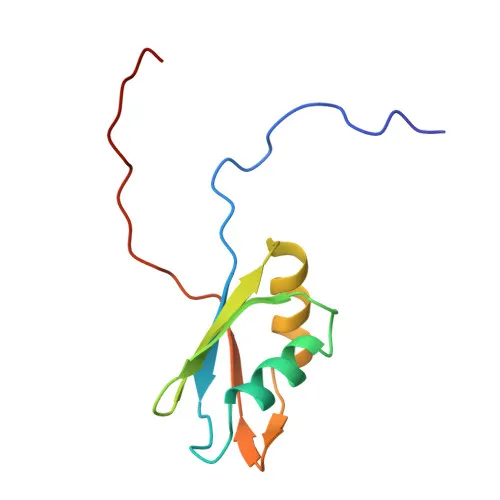
Polyclonal Antibodies
Anti-A1CF (APOBEC1 Complementation Factor) Rabbit Polyclonal Antibody for WB, IHC-P, ELISA - Q9NQ94
Item Number : CM0014005
Price varies based on specs and customizations
- Application
- WB, IHC-P, ELISA
- Cross Reactivity
- Human, Mouse, Rat
- Protein Weight
- 65kDa

Shipping:
Contact us to get shipping details Enjoy On-time Dispatch Guarantee.
Why Choose Us
Easy ordering process, quality products, and dedicated support for your business success.
Core Product Specifications and Parameters
| Parameter | Value |
|---|---|
| Product Name | A1CF Rabbit pAb |
| Remarks/Alias | ACF; ASP; ACF64; ACF65; APOBEC1CF; A1CF |
| Species | Human |
| Gene ID (Human) | 29974 |
| Gene ID | 29974 |
| Immunogen | Recombinant protein | Recombinant fusion protein containing a sequence corresponding to amino acids 50-120 of human A1CF (NP_055391.2). |
| Source | Rabbit |
| Category | Polyclonal Antibodies |
| Application | WB, IHC-P, ELISA |
| Cross Reactivity | Human, Mouse, Rat |
| SWISS | Q9NQ94 |
| Protein Weight | 65kDa |
| Shipping | Ice bag |
Biological Background: A1CF Function and Localization
- A1CF (APOBEC1 complementation factor), also designated ACF, ASP, ACF64, ACF65, or APOBEC1CF, is a 65 kDa RNA-binding protein that serves as an essential component of the apolipoprotein B (APOB) mRNA editing complex.
- It functions as the RNA-binding subunit that docks the catalytic deaminase APOBEC1 to the APOB mRNA, enabling site-specific cytidine-to-uridine editing that converts a glutamine codon (CAA) into a premature stop codon (UAA).
- The editing complex also stabilizes the edited APOB mRNA by protecting it from nonsense-mediated decay, thereby ensuring production of the truncated APOB protein isoform.
- Subcellularly, A1CF localizes to the nucleus, endoplasmic reticulum, and cytoplasm, suggesting diverse roles in mRNA processing and transport.
- It is widely expressed across tissues, with the highest levels observed in brain, liver, pancreas, colon, and spleen.
- Post-translational modifications include phosphorylation, as indicated by proteomics identification and database annotations.
- Additionally, A1CF undergoes alternative splicing and contains repeat domains, contributing to its functional versatility as an RNA-binding phosphoprotein.
Experimental Guidance and Technical Tips
- The immunogen corresponds to amino acids 50–120 of human A1CF, a region likely to be exposed in the native protein; consider this when designing epitope-based detection strategies.
- For Western blot (WB), the predicted molecular weight is ~65 kDa; validate detection in human, mouse, or rat tissue lysates such as liver or brain where A1CF is highly expressed.
- For immunohistochemistry (IHC-P), optimize antigen retrieval and antibody dilution using formalin-fixed paraffin-embedded sections; tissues with high endogenous A1CF (e.g., liver, pancreas) are suitable positive controls.
- In ELISA, confirm specificity by testing against recombinant A1CF or tissue extracts, and consider pairing with a monoclonal capture antibody if sandwich formats are desired.
- As a polyclonal antibody, expect some lot-to-lot variation; we recommend confirming performance in your specific assay system.
CamelBio: Your One-Stop Sourcing Bridge
CamelBio is your dedicated one-stop partner for IVD raw material sourcing, offering validated antibody pairs, optimized monoclonal and polyclonal antibodies, bulk ancillary reagents, and custom rare-target raw-material procurement. This anti-A1CF antibody supports research and assay development in apolipoprotein biology and mRNA editing pathways. Whether you require single reagents or integrated supply solutions, CamelBio bridges your concept-to-clinic needs with reliable B2B support.
Product Datasheet
Anti-A1CF (APOBEC1 Complementation Factor) Rabbit Polyclonal Antibody for WB, IHC-P, ELISA - Q9NQ94
REQUEST A QUOTE
Our professional team will reply to you within one business day. Please feel free to contact us!