Polyclonal Antibodies
Anti-14-3-3 gamma Polyclonal Antibody for WB, IHC-P, ELISA - P61981
Item Number : CM0028112
Price varies based on specs and customizations
- Application
- WB, IHC-P, ELISA
- Cross Reactivity
- Human, Mouse, Rat
- Protein Weight
- 28kDa

Shipping:
Contact us to get shipping details Enjoy On-time Dispatch Guarantee.
Why Choose Us
Easy ordering process, quality products, and dedicated support for your business success.
Core Product Specifications and Parameters
| Parameter | Value |
|---|---|
| Product Name | 14-3-3 gamma Rabbit pAb |
| Remarks/Alias | DEE56; EIEE56; PPP1R170; 14-3-3GAMMA; 14-3-3 gamma |
| Species | Human |
| Gene ID (Human) | 7532 |
| Gene ID | 7532 |
| Immunogen | Synthetic peptide|A synthetic peptide corresponding to a sequence within amino acids 100-200 of human 14-3-3 gamma (NP_036611.2). |
| Source | Rabbit |
| Category | Polyclonal Antibodies |
| Application | WB, IHC-P, ELISA |
| Cross Reactivity | Human, Mouse, Rat |
| SWISS | P61981 |
| Protein Weight | 28kDa |
| Shipping | Ice bag |
Biological Background: 14-3-3 gamma Function and Localization
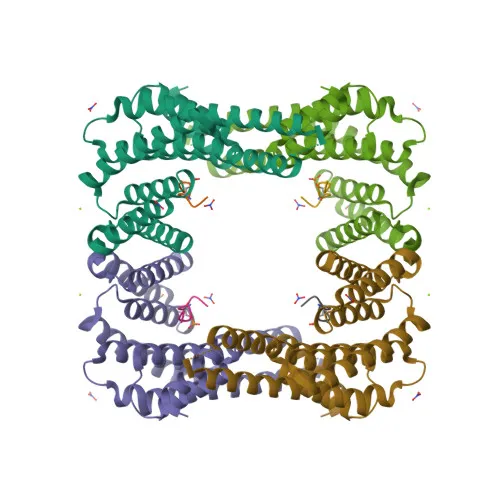
- 14-3-3 protein gamma (YWHAG) is a member of the 14-3-3 family of conserved regulatory molecules, also known as protein kinase C inhibitor protein 1 (KCIP-1).
- It functions as an adapter protein that binds to phosphoserine or phosphothreonine motifs on numerous partners, modulating their activity in various signaling pathways. Related references: PMID:15696159 PMID:16511572 PMID:36732624
- In the mTORC1 nutrient-sensing pathway, 14-3-3 gamma binds phosphorylated WDR24 of the GATOR2 complex, promoting its inactivation. Related references: PMID:36732624
- It positively regulates NMDA glutamate receptor function by interacting with BEST1 to facilitate L-glutamate secretion. Related references: PMID:29121962
- In keratinocytes, 14-3-3 gamma reduces intercellular adhesion by binding PKP1 and sequestering it in the cytoplasm away from desmosomes. Related references: PMID:29678907
- 14-3-3 gamma participates in the mitochondrial protein catabolic process (MALM), aiding the degradation of damaged proteins within mitochondria. Related references: PMID:22532927
- Subcellularly, it is found in the cytoplasm, cytosol, and mitochondrial matrix.
- It is highly expressed in brain, skeletal muscle, and heart, and is subject to post-translational modifications including acetylation and phosphorylation.
- Disease-associated variants of 14-3-3 gamma are linked to epilepsy (DEE56/EIEE56).
Experimental Guidance and Technical Tips
- The immunogen is a synthetic peptide corresponding to amino acids 100–200 of human 14-3-3 gamma. For applications such as Western blot (WB), consider using a peptide competition assay to confirm the specificity of the detected band.
- This polyclonal antibody is suitable for WB, IHC-P, and ELISA according to the provider. For IHC-P, antigen retrieval methods and antibody titration should be optimized for the specific tissue type and fixation conditions.
- Since 14-3-3 gamma is a cytosolic and mitochondrial protein, prepare whole-cell or subcellular fraction lysates for WB to enrich the target signal.
- Cross-reactivity is reported with human, mouse, and rat; validate reactivity in the relevant species’ sample system before use.
CamelBio: Your One-Stop Sourcing Bridge
CamelBio is your integrated partner for IVD raw-material procurement, offering a wide range of validated antibodies, recombinant proteins, and bulk ancillary reagents for diagnostic and research applications. If you require customized solutions for 14-3-3 signaling targets or rare antibody development, our consulting services can help streamline your project from concept to clinic. Explore our catalog for matched antibody pairs, optimized monoclonal/polyclonal antibodies, and flexible bulk supply options.
REQUEST A QUOTE
Our professional team will reply to you within one business day. Please feel free to contact us!