Acetylated Antibodies
Acetyl-Histone H4 (K12) Rabbit Polyclonal Antibody for WB, IHC-P, IF/ICC, ELISA - P62805
Item Number : CM0000125
Price varies based on specs and customizations
- Application
- WB, IHC-P, IF/ICC, ELISA
- Cross Reactivity
- Human, Mouse, Rat, Other (Wide Range Predicted)
- Protein Weight
- 11kDa

Shipping:
Contact us to get shipping details Enjoy On-time Dispatch Guarantee.
Why Choose Us
Easy ordering process, quality products, and dedicated support for your business success.
Core Product Specifications and Parameters
| Parameter | Value |
|---|---|
| Product Name | Acetyl-Histone H4-K12 Rabbit pAb |
| Remarks/Alias | H4/I; H4C1; H4C3; H4C4; H4C5; H4C6; H4C8; H4C9; H4FI; H4-16; H4C11; H4C12; H4C13; H4C14; H4C15; H4C16; HIST1H4B; Acetyl-Histone H4-K12 |
| Species | Human |
| GeneID (human) | H4 |
| GeneID | 8359 |
| Immunogen | Synthetic peptide - A synthetic acetylated peptide around K12 of human Histone H4 (NP_001029249.1). |
| Source | Rabbit |
| Category | Acetylated Antibodies |
| Application | WB, IHC-P, IF/ICC, ELISA |
| Cross Reactivity | Human, Mouse, Rat, Other (Wide Range Predicted) |
| SWISS | P62805 |
| Protein Weight | 11kDa |
| Shipping | Ice bag |
Biological Background: Histone H4 Function and Localization
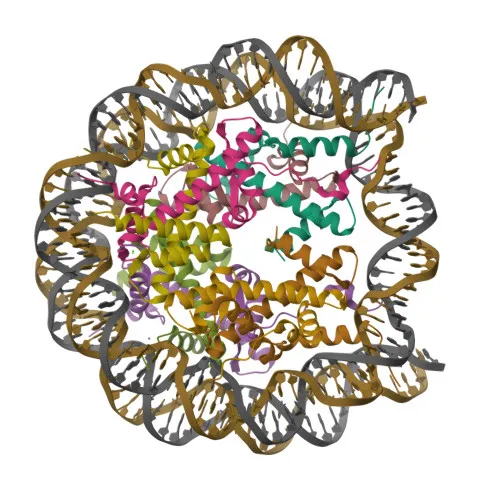
Histone H4 is one of the four core histones that form the nucleosome, the fundamental repeating unit of chromatin. As a highly conserved structural protein, it plays an essential role in packaging and organizing DNA within the nucleus, directly influencing gene expression, DNA replication, repair, and chromosomal stability.
Related references: UniProtKB P62805
The function of Histone H4 is dynamically regulated by a vast array of post-translational modifications (PTMs), collectively termed the 'histone code'. Acetylation at specific lysine residues, including lysine 12 (K12, corresponding to K13 in UniProt P62805), is a key epigenetic mark that modulates chromatin structure and promotes active transcription. Acetylation at this residue has been documented in multiple studies.
Related references: PMID:17967882 PMID:2474456 PMID:7664735 PMID:19608861
Subcellular localization of Histone H4 is predominantly nuclear, where it associates with chromosomal DNA. Specific acetylation patterns, such as at K12, can influence its localization dynamics during processes like spermatogenesis.
Related references: UniProtKB P62805
Structurally, the Histone H4 protein is approximately 11.4 kDa, and it is encoded by multiple gene copies (e.g., H4C1, H4C2, etc.) that produce an identical protein sequence. This multiplicity ensures high expression levels required for chromatin assembly. Due to the extreme evolutionary conservation of Histone H4 sequence across species, antibodies targeting this protein often exhibit broad cross-reactivity.
Experimental Guidance and Technical Tips
- Immunogen Design: This antibody was raised against a synthetic acetylated peptide around K12. For specific detection, consider that the antibody may preferentially recognize the acetylated form; validation with deacetylase inhibitor-treated samples can enhance signal.
- Western Blotting (WB): Histone H4 has a low molecular weight (~11 kDa). Use 15% or gradient SDS-PAGE gels and ensure efficient transfer (e.g., overnight wet transfer at low voltage) to prevent loss of small proteins. Include appropriate molecular weight markers and confirm specificity using non-acetylated peptide competition assays if needed.
- Immunohistochemistry (IHC-P) & Immunofluorescence (IF/ICC): Antigen retrieval (e.g., citrate buffer, pH 6.0) may improve epitope accessibility. Use positive control tissues with active transcription or proliferation (e.g., testis, thymus) and consider blocking endogenous biotin or peroxidases as per standard protocols.
- ELISA: For quantitative analysis, coat plates with acetylated H4 peptide or histone extracts and verify peptide specificity using non-acetylated controls.
- Cross-Reactivity: The antibody is predicted to cross-react with acetylated Histone H4 from human, mouse, rat, and many other species. Validate in your experimental system to rule out binding to non-acetylated H4 or other acetylated proteins, particularly given the polyclonal nature of the antibody.
- Alternative Approaches: If high specificity for the acetyl-K12 mark alone is required, consider pairing with a monoclonal antibody or using site-specific competition assays to confirm epitope recognition.
CamelBio: Your One-Stop Sourcing Bridge
CamelBio serves as a reliable, one-stop sourcing partner for diagnostic manufacturers, laboratories, and research institutes requiring high-quality IVD raw materials. This acetyl-Histone H4-K12 rabbit polyclonal antibody represents one of many specialized reagents we supply to support epigenetic and chromatin research. Beyond individual antibodies, we can provide validated antibody pairs, optimized monoclonal and polyclonal antibody panels, bulk ancillary reagents, and customized sourcing for rare target raw materials, helping streamline your assay development from concept to clinic.
REQUEST A QUOTE
Our professional team will reply to you within one business day. Please feel free to contact us!