Acetylated Antibodies
Acetyl-Histone H3-K9/K14/K18/K23/K27 Rabbit Polyclonal Antibody (Q16695/P68431) for WB, IF/ICC, ELISA
Item Number : CM0000135
Price varies based on specs and customizations
- Application
- WB, IF/ICC, ELISA
- Cross Reactivity
- Human, Mouse, Rat, Other (Wide Range Predicted)
- Protein Weight
- 15kDa

Shipping:
Contact us to get shipping details Enjoy On-time Dispatch Guarantee.
Why Choose Us
Easy ordering process, quality products, and dedicated support for your business success.
Core Product Specifications and Parameters
| Parameter | Value |
|---|---|
| Product Name | Acetyl-Histone H3-K9/K14/K18/K23/K27 Rabbit pAb |
| Remarks/Alias | H3/A; H3C2; H3C3; H3C4; H3C6; H3C7; H3C8; H3FA; H3C10; H3C11; H3C12; HIST1H3A; Acetyl-Histone H3-K9/K14/K18/K23/K27 |
| Species | Human |
| GeneID (human) | H3 |
| GeneID | 8290/8350 |
| Immunogen | Synthetic peptide |
| Source | Rabbit |
| Category | Acetylated Antibodies |
| Application | WB, IF/ICC, ELISA |
| Cross Reactivity | Human, Mouse, Rat, Other (Wide Range Predicted) |
| SWISS | Q16695/P68431 |
| Protein Weight | 15kDa |
| Shipping | Ice bag |
Biological Background: Histone H3 Function and Localization
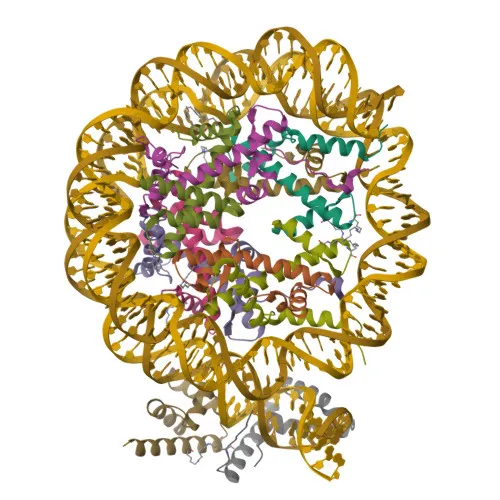
Histone H3 is a core component of the nucleosome, the fundamental repeating unit of chromatin. As part of the histone octamer, it plays an essential role in wrapping and compacting DNA, thereby limiting DNA accessibility to the cellular machinery that requires DNA as a template. This structural foundation enables histones to centrally regulate transcription, DNA repair, DNA replication, and chromosomal stability.
The N-terminal tail of histone H3 is subject to extensive post-translational modifications (PTMs), including acetylation, methylation, phosphorylation, and others, which constitute a complex "histone code." These modifications dynamically control chromatin architecture and gene expression. Specifically, acetylation at lysine residues 9, 14, 18, 23, and 27 is known to neutralize the positive charge of lysines, weakening the interaction between histones and DNA. This leads to a more open chromatin conformation (euchromatin) and is strongly associated with transcriptional activation. The acetylation marks at these sites are recognized by bromodomain-containing proteins and chromatin remodelers, facilitating the recruitment of the transcription machinery. Related references:
Histone H3 is primarily localized in the nucleus and on chromosomes, where it is incorporated into chromatin during DNA replication (for replication-dependent variants such as H3.1) or in a replication-independent manner (for replacement variants). The canonical H3.1 protein (encoded by multiple genes, including HIST1H3A–J) is expressed in many tissues, while the testis-specific H3.1t variant (H3-4, encoded by HIST3H3) is found in testicular cells. Both variants share the conserved N-terminal tail sequence containing the acetylated lysines targeted by this antibody.
Experimental Guidance and Technical Tips
- The immunogen is a synthetic acetylated peptide spanning K9, K14, K18, K23, and K27 of human Histone H3. This multi-site design may allow broad detection of hyperacetylated H3; consider verifying specificity using non-acetylated peptide controls in competitive assays.
- For Western blotting, acid-extraction of histones or chromatin-enriched fractionation can improve signal-to-noise ratios; loading normalization with a total histone H3 antibody is recommended to account for possible epitope masking by other PTMs.
- In immunofluorescence/ICC, permeabilization with Triton X-100 or digitonin may enhance antibody penetration into the nucleus; fixation conditions should be optimized to balance epitope accessibility and morphology.
- ELISA applications may benefit from including both acetylated and non-acetylated peptide coatings to confirm selective binding.
- The predicted cross-reactivity with human, mouse, rat, and other species suggests utility across multiple model systems; however, validation in the specific sample system and experimental context is essential.
CamelBio: Your One-Stop Sourcing Bridge
CamelBio offers diagnostic manufacturers, laboratories, and research institutes a streamlined, one-stop platform for IVD raw-material procurement. This acetyl-Histone H3 antibody is part of our epigenetics and chromatin-focused portfolio, complementing our ability to supply validated antibody pairs, optimized monoclonal/polyclonal reagents, bulk ancillary materials, and rare-modification specific antibodies. Reach out to our team to discuss how we can support your IVD development and production—from concept to clinic—with integrated technical and supply chain solutions.
REQUEST A QUOTE
Our professional team will reply to you within one business day. Please feel free to contact us!