Acetylated Antibodies
Acetyl-Histone H3 K9 (Q16695/P68431) Rabbit Polyclonal Antibody - WB IP IF IHC ChIP ELISA
Item Number : CM0000170
Price varies based on specs and customizations
- Application
- WB, IP, IF/ICC, IHC-P, ChIP, ChIP-seq, ELISA
- Cross Reactivity
- Human, Mouse, Rat, Other (Wide Range Predicted)
- Protein Weight
- 15 kDa

Shipping:
Contact us to get shipping details Enjoy On-time Dispatch Guarantee.
Why Choose Us
Easy ordering process, quality products, and dedicated support for your business success.
Core Product Specifications and Parameters
| Parameter | Value |
|---|---|
| Product Name | Acetyl-Histone H3-K9 Rabbit pAb |
| Remarks/Alias | H3t; H3.4; H3/g; H3FT; H3C16; HIST3H3; Acetyl-Histone H3-K9 |
| Species | Human |
| GeneID (Human) | H3 |
| GeneID | 8290/8350 |
| Immunogen | A synthetic peptide corresponding to a sequence within amino acids 1-100 of human Histone H3 (NP_003520.1) |
| Source | Rabbit |
| Category | Acetylated Antibodies |
| Application | WB, IP, IF/ICC, IHC-P, ChIP, ChIP-seq, ELISA |
| Cross Reactivity | Human, Mouse, Rat, Other (Wide Range Predicted) |
| SWISS | Q16695/P68431 |
| Protein Weight | 15 kDa |
| Shipping | Ice bag |
Biological Background: Histone H3 Function and Localization
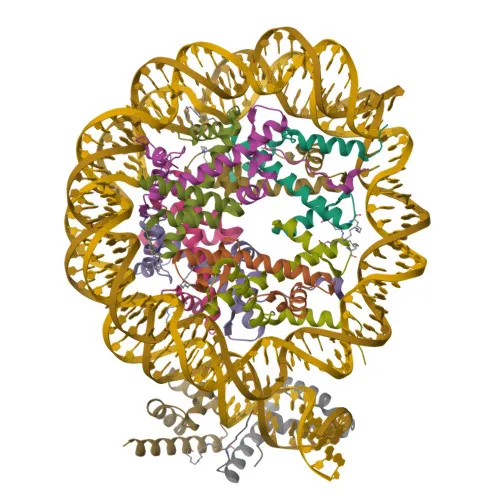
Histone H3 is a core component of the nucleosome, the fundamental repeating unit of chromatin. Nucleosomes wrap and compact DNA, thereby regulating accessibility to the transcriptional machinery. Histones, including H3, play central roles in transcription regulation, DNA repair, DNA replication, and chromosomal stability. DNA accessibility is dynamically regulated through a variety of post-translational modifications (PTMs) on histones, collectively known as the "histone code," and nucleosome remodeling.
Histone H3 localizes to the nucleus and chromosomes. Two major isoforms exist in humans: the canonical replication-dependent histone H3.1 (encoded by multiple genes such as H3C1/HIST1H3A, H3C2/HIST1H3B, etc., UniProt: P68431) and the replication-independent, testis-specific histone H3.1t (encoded by H3-4/HIST3H3, UniProt: Q16695). While H3.1 is widely expressed, H3.1t expression is restricted to testicular cells.
A hallmark of histone H3 is its extensive array of PTMs, including acetylation, methylation, phosphorylation, citrullination, and others. Acetylation at lysine 9 (K9) of H3 is a well-characterized epigenetic mark generally associated with transcriptionally active euchromatin and open chromatin regions. This modification is dynamically regulated by histone acetyltransferases (HATs) and deacetylases (HDACs), contributing to gene regulation, cell cycle control, and development. Acetylation at multiple other lysine residues on H3 has been experimentally verified and shares similar regulatory roles.
Related references: PMID:16267050, PMID:16627869, PMID:16185088
Experimental Guidance and Technical Tips
- The immunogen is a synthetic peptide spanning amino acids 1-100 of human Histone H3, which may lead to recognition of multiple H3 variants. Consider verifying specificity for the target isoform in your sample system.
- For Western blot (WB), a band at approximately 15 kDa is expected. Histone extraction protocols and appropriate loading controls are recommended for optimal results.
- For IP and ChIP applications, validate the antibody under your specific conditions. In ChIP-seq, include input DNA and non-specific IgG controls, and optimize cross-linking if necessary.
- In immunofluorescence (IF/ICC), fixation and permeabilization methods can influence epitope accessibility; test different protocols to achieve the best signal-to-noise ratio.
- The antibody has predicted broad cross-reactivity (human, mouse, rat, others), but always confirm performance in your experimental setup.
CamelBio: Your One-Stop Sourcing Bridge
CamelBio provides a comprehensive one-stop sourcing solution for IVD raw materials, supporting diagnostic manufacturers, laboratories, and research institutes from concept to clinic. This acetyl-histone H3-K9 antibody supports epigenetics research and chromatin biology applications. In addition to validated antibody pairs and optimized polyclonal and monoclonal antibodies, CamelBio offers bulk ancillary reagents and can help source rare target raw materials to accelerate your IVD development pipeline.
REQUEST A QUOTE
Our professional team will reply to you within one business day. Please feel free to contact us!