Acetylated Antibodies
Acetyl-Histone H3-K56 Rabbit Polyclonal Antibody (Q16695/P68431) for Epigenetics Research | WB, ChIP, ELISA
Item Number : CM0000203
Price varies based on specs and customizations
- Application
- WB, IF/ICC, ELISA, ChIP
- Cross Reactivity
- Human, Mouse, Rat, Other (Wide Range Predicted)
- Protein Weight
- 15 kDa

Shipping:
Contact us to get shipping details Enjoy On-time Dispatch Guarantee.
Why Choose Us
Easy ordering process, quality products, and dedicated support for your business success.
Core Product Specifications and Parameters
| Parameter | Value |
|---|---|
| Product Name | Acetyl-Histone H3-K56 Rabbit pAb |
| Remarks/Alias | H3t; H3.4; H3/g; H3FT; H3C16; HIST3H3; Acetyl-Histone H3-K56 |
| Species | Human |
| GeneID (human) | H3C family genes; H3-4 (HIST3H3) |
| GeneID | 8290/8350 |
| Immunogen | A synthetic acetylated peptide around K56 of human Histone H3 (NP_003520.1) |
| Source | Rabbit |
| Category | Acetylated Antibodies |
| Application | WB, IF/ICC, ELISA, ChIP |
| Cross Reactivity | Human, Mouse, Rat, Other (Wide Range Predicted) |
| SWISS | Q16695/P68431 |
| Protein Weight | 15 kDa |
| Shipping | Ice bag |
Biological Background: Histone H3 Function and Localization
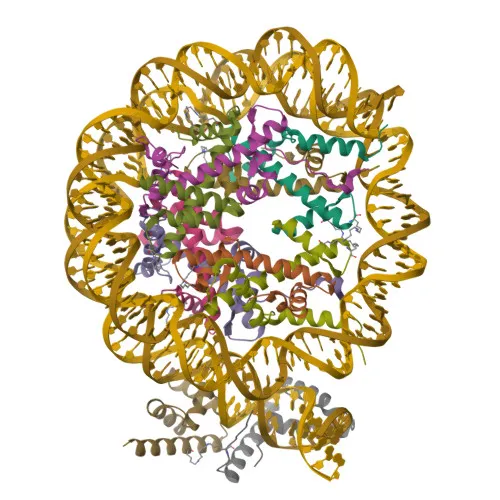
Histone H3 is a core component of the nucleosome, wrapping and compacting DNA into chromatin. This fundamental role regulates transcription, DNA repair, replication, and chromosomal stability through a complex set of post-translational modifications known as the histone code. Related references: UniProt Q16695
The canonical somatic histone H3.1 (SWISS P68431) is encoded by a multigene family (H3C1–H3C12) and ubiquitously expressed, while the testis-specific variant H3.1t (SWISS Q16695, gene H3-4/HIST3H3) is restricted to testicular cells.
Acetylation of lysine residues, including K56, is a pivotal epigenetic modification that alters chromatin structure and recruits effector proteins. Hyperacetylation generally correlates with transcriptional activation, while deacetylation leads to gene silencing. Related references: PMID:17194708
Subcellular localization is exclusively nuclear, associated with chromosomes during cell division and dispersed throughout the nucleus during interphase.
Experimental Guidance and Technical Tips
- The immunogen is a synthetic acetylated peptide around K56; consider using acetylation-deficient mutants or deacetylase inhibitors to confirm specificity in your experimental system.
- For Western blot, expect a band at ~15 kDa. Nuclear fractionation or acid extraction of histones is recommended for clear detection.
- In ChIP assays, optimize cross-linking time and antibody amount per reaction. Include well-characterized positive (e.g., active promoters) and negative (heterochromatic) genomic regions as controls.
- Broad predicted cross-reactivity necessitates validation of reactivity in the species and tissue of interest before proceeding with large-scale experiments.
- The antibody is listed for multiple applications (WB, IF/ICC, ELISA, ChIP); independent optimization and validation are advised for each technique.
CamelBio: Your One-Stop Sourcing Bridge
CamelBio is a one-stop platform for IVD raw materials, offering a comprehensive portfolio from validated antibody pairs to bulk ancillary reagents. Our Acetyl-Histone H3-K56 Rabbit pAb supports epigenetic studies and diagnostic development targeting histone modifications. Whether you need rare-target antibody sourcing or scalable production, CamelBio bridges your concept to clinic with reliable supply solutions.
REQUEST A QUOTE
Our professional team will reply to you within one business day. Please feel free to contact us!