Acetylated Antibodies
Acetyl-Histone H3 (K4/K9/K14/K18/K23/K27) Rabbit Polyclonal Antibody (Q16695 / P68431) for WB, ELISA
Item Number : CM0000166
Price varies based on specs and customizations
- Application
- WB, ELISA
- Cross Reactivity
- Human, Mouse, Rat, Other (Wide Range Predicted)
- Protein Weight
- 15kDa

Shipping:
Contact us to get shipping details Enjoy On-time Dispatch Guarantee.
Why Choose Us
Easy ordering process, quality products, and dedicated support for your business success.
Core Product Specifications and Parameters
| Parameter | Value |
|---|---|
| Product Name | Acetyl-Histone H3-K4/K9/K14/K18/K23/K27 Rabbit pAb |
| Remarks/Alias | H3/A; H3C2; H3C3; H3C4; H3C6; H3C7; H3C8; H3FA; H3C10; H3C11; H3C12; HIST1H3A; Acetyl-Histone H3-K4/K9/K14/K18/K23/K27 |
| Species | Human |
| GeneID (Human) | H3 |
| GeneID | 8290/8350 |
| Immunogen | Synthetic acetylated peptide around K4 & K27 of human Acetyl-Histone H3-K4/K9/K14/K18/K23/K27 (NP_003520.1) |
| Source | Rabbit |
| Category | Acetylated Antibodies |
| Application | WB, ELISA |
| Cross Reactivity | Human, Mouse, Rat, Other (Wide Range Predicted) |
| SWISS | Q16695/P68431 |
| Protein Weight | 15kDa |
| Shipping | Ice bag |
Biological Background: Acetyl-Histone H3 Function and Localization
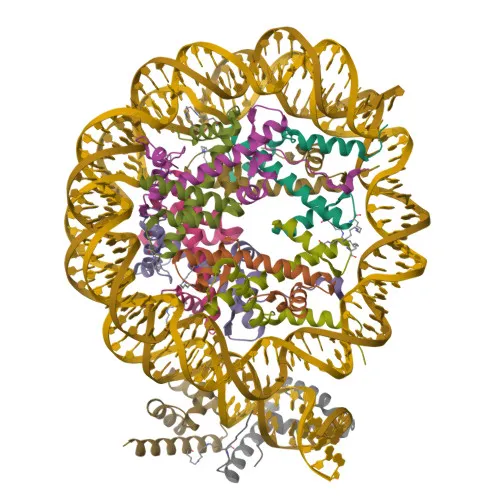
Histone H3 is a core component of the nucleosome, the fundamental repeating unit of chromatin. Nucleosomes wrap and compact DNA, thereby regulating access to the genetic material. This dynamic packaging plays a central role in transcription, DNA replication, repair, and chromosomal stability.
Related references: UniProt Q16695 / P68431
Post-translational modifications of histones, particularly acetylation of specific N-terminal lysine residues, form a critical part of the "histone code" that governs chromatin structure and function. Acetylation at residues K4, K9, K14, K18, K23, and K27 of Histone H3 is associated with transcriptional activation, as it neutralizes the positive charge of lysines, weakening histone-DNA interactions and promoting an open chromatin conformation. These modifications are written by histone acetyltransferases (HATs) and erased by histone deacetylases (HDACs), and they serve as docking sites for various effector proteins.
Related references: K4 (K5) acetylation: PMID:17194708, K9 (K10) acetylation: PMID:16185088, PMID:16267050, K14 (K15) acetylation: PMID:16185088, PMID:16267050, K18 (K19) acetylation: PMID:16267050, PMID:16627869, K23 (K24) acetylation: PMID:16267050, PMID:16457588, K27 (K28) acetylation: PMID:16627869, PMID:17194708
Histone H3 is predominantly localized in the nucleus, where it associates with chromosomal DNA. The canonical H3.1 variant (P68431) is expressed in most somatic cells, while the tissue-specific H3.1t (Q16695) is restricted to testicular cells. The antibody’s predicted wide-range cross-reactivity covers both variants.
Related references: Subcellular location: UniProt Q16695 / P68431, Tissue specificity: Q16695
Experimental Guidance and Technical Tips
- The immunogen was a synthetic acetylated peptide containing K4 and K27 modifications; the antibody may preferentially recognize these epitopes, but broader recognition of similarly acetylated lysines is possible. Consider validating specificity using mutant or unmodified peptide controls.
- For Western blot, acid-extracted histones or nuclear extracts are recommended to enrich the target; the expected band size is approximately 15 kDa.
- In ELISA, coating with acetylated peptides or native histone preparations can help confirm reactivity; titrate the antibody and detection system for optimal signal-to-noise.
- Histone H3 is highly conserved across species; the antibody is predicted to react with a wide range of organisms, but validation in the user’s sample system is advised.
- To maintain stability, aliquot and store at -20°C or -80°C after reconstitution, and avoid repeated freeze-thaw cycles.
CamelBio: Your One-Stop Sourcing Bridge
CamelBio offers diagnostic manufacturers, research institutes, and laboratories a streamlined pathway to comprehensive IVD raw-material supply, from validated antibody pairs and optimized polyclonal/monoclonal antibodies to bulk ancillary reagents and rare-target sourcing. The Acetyl-Histone H3 (K4/K9/K14/K18/K23/K27) rabbit polyclonal antibody exemplifies our commitment to providing high-quality epigenetic research tools. Partner with CamelBio to bridge your assay development from concept to clinic with confidence.
REQUEST A QUOTE
Our professional team will reply to you within one business day. Please feel free to contact us!