Acetylated Antibodies
Acetyl-Histone H3-K4 Rabbit Monoclonal Antibody (Q16695/P68431) for WB, IP, IHC, ChIP, ELISA
Item Number : CM0000158
Price varies based on specs and customizations
- Application
- WB, IP, IF/ICC, IHC-P, DB, ChIP, ELISA
- Cross Reactivity
- Human, Mouse, Rat, Other (Wide Range Predicted)
- Protein Weight
- 15 kDa

Shipping:
Contact us to get shipping details Enjoy On-time Dispatch Guarantee.
Why Choose Us
Easy ordering process, quality products, and dedicated support for your business success.
Core Product Specifications and Parameters
| Parameter | Value |
|---|---|
| Product Name | Acetyl-Histone H3-K4 Rabbit mAb |
| Remarks/Alias | H3t; H3.4; H3/g; H3FT; H3C16; HIST3H3; Acetyl-Histone H3-K4 |
| Species | Human |
| GeneID (human) | 8290/8350 |
| GeneID | 8290/8350 |
| Immunogen | Synthetic peptide: A synthetic acetylated peptide around K4 of human Histone H3 (NP_003520.1) |
| Source | Rabbit |
| Category | Acetylated Antibodies |
| Application | WB, IP, IF/ICC, IHC-P, DB, ChIP, ELISA |
| Cross Reactivity | Human, Mouse, Rat, Other (Wide Range Predicted) |
| SWISS | Q16695/P68431 |
| Protein Weight | 15 kDa |
| Shipping | Ice bag |
Biological Background: Histone H3 Function and Localization
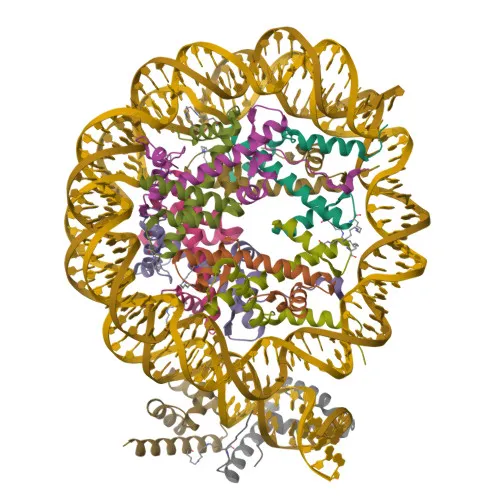
Histone H3 is a core component of the nucleosome, the fundamental repeating unit of chromatin. Together with histones H2A, H2B, and H4, it forms an octamer around which ~147 bp of DNA is wrapped, facilitating DNA compaction and organization within the nucleus. Related references: UniProt Q16695, UniProt P68431
Nucleosomes regulate the accessibility of DNA to cellular machineries, thereby playing a central role in transcription regulation, DNA repair, DNA replication, and chromosomal stability. This regulatory function is mediated through a complex set of post-translational modifications (PTMs) on histones, collectively referred to as the 'histone code'. Related references: UniProt Q16695, UniProt P68431
Acetylation is one of the most extensively studied PTMs and is generally associated with an open, transcriptionally active chromatin state. The acetylation of specific lysine residues, including lysine 4 (H3K4ac), plays a critical role in epigenetic regulation and gene expression. Related references: UniProt P68431 (acetylation annotations)
Multiple variant forms of histone H3 exist in mammals. The canonical H3.1 (encoded by multiple genes such as those under accession P68431) is expressed throughout the cell cycle, while the H3.1t variant (accession Q16695) is expressed in testicular cells. The epitope for this antibody lies in a highly conserved N-terminal tail region, enabling broad species cross-reactivity. Related references: UniProt Q16695, UniProt P68431
Histone H3 is localized to the nucleus and is tightly associated with chromosomal DNA. Its presence in actively transcribed regions and at regulatory elements underscores the importance of studying site-specific modifications such as H3K4 acetylation. Related references: UniProt Q16695, UniProt P68431
Experimental Guidance and Technical Tips
- The immunogen is a synthetic acetylated peptide surrounding lysine 4 of human Histone H3, designed to specifically recognize the acetylated form of H3K4.
- Recommended applications include Western blot (detecting a band at ~15 kDa), immunoprecipitation, immunofluorescence/ICC, immunohistochemistry (paraffin), dot blot, chromatin immunoprecipitation, and ELISA.
- For ChIP, consider optimizing crosslinking and sonication conditions; the antibody's specificity for the acetylated epitope makes it suitable for capturing actively transcribed chromatin regions.
- When using for IP or IF, validate the antibody in your specific sample system and include appropriate positive and negative controls (e.g., treatment with histone deacetylase inhibitors to increase acetylation levels).
- Due to high conservation across species, cross-reactivity is expected with human, mouse, rat, and other species (wide range predicted); verify in non-typical species if needed.
- For critical applications, pre-adsorption with non-acetylated peptide may be considered to confirm specificity.
CamelBio: Your One-Stop Sourcing Bridge
CamelBio provides diagnostic manufacturers, labs, and research institutes with a comprehensive one-stop platform for IVD raw materials, covering everything from concept to commercialization. For epigenetics and chromatin research, CamelBio offers optimized monoclonal antibodies like this Acetyl-Histone H3-K4 antibody, along with validated antibody pairs, bulk ancillary reagents, and rare target sourcing. Their supply capabilities ensure consistent, high-quality raw materials to accelerate your IVD development from early-stage research to clinical application.
REQUEST A QUOTE
Our professional team will reply to you within one business day. Please feel free to contact us!