Acetylated Antibodies
Acetyl-Histone H3-K27 Rabbit Monoclonal Antibody (Q16695/P68431) for WB, ChIP, IF, IHC
Item Number : CM0000197
Price varies based on specs and customizations
- Application
- WB, DB, IHC-P, IF/ICC, ELISA, ChIP, ChIP-seq, CUT&Tag
- Cross Reactivity
- Human, Mouse, Rat, Other (Wide Range Predicted)
- Protein Weight
- 15 kDa

Shipping:
Contact us to get shipping details Enjoy On-time Dispatch Guarantee.
Why Choose Us
Easy ordering process, quality products, and dedicated support for your business success.
Core Product Specifications and Parameters
| Parameter | Value |
|---|---|
| Product Name | Acetyl-Histone H3-K27 Rabbit mAb |
| Remarks/Alias | H3t; H3.4; H3/g; H3FT; H3C16; HIST3H3; Acetyl-Histone H3-K27 |
| Species | Human |
| GeneID (Human) | H3 |
| GeneID | 8290/8350 |
| Immunogen | Synthetic acetylated peptide around K27 of human Acetyl-Histone H3-K27 (NP_003520.1) |
| Source | Rabbit |
| Category | Acetylated Antibodies |
| Application | WB, DB, IHC-P, IF/ICC, ELISA, ChIP, ChIP-seq, CUT&Tag |
| Cross Reactivity | Human, Mouse, Rat, Other (Wide Range Predicted) |
| SWISS | Q16695/P68431 |
| Protein Weight | 15 kDa |
| Shipping | Ice bag |
Biological Background: Histone H3 (H3.1/H3.1t) Function and Localization
-
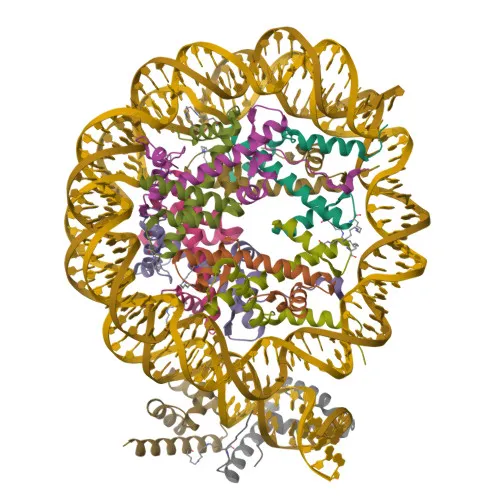
Histone H3 is a core component of the nucleosome, the fundamental repeating unit of chromatin. Nucleosomes wrap and compact DNA, thereby regulating access to the genetic material for transcription, DNA replication, repair, and recombination. This architecture is essential for chromosomal stability and proper cell function. Related references: UniProt Q16695, UniProt P68431.
-
In humans, multiple non-allelic histone H3 variants exist, including the canonical replication-dependent H3.1 proteins (encoded by genes such as H3C1, H3C2, etc., GeneIDs: 8350, 8290) and the testis-specific H3.1t variant (encoded by H3-4, also known as H3FT, HIST3H3). The canonical H3.1 is ubiquitously expressed, whereas H3.1t expression is restricted to testicular cells. Related references: UniProt Q16695 (tissue specificity).
-
Both H3.1 and H3.1t localize to the nucleus and associate with chromosomes. They contain a histone fold domain that mediates their incorporation into nucleosomes and an N-terminal tail that protrudes from the nucleosome, serving as a platform for a myriad of post-translational modifications (PTMs). Related references: UniProt P68431.
-
The N-terminal tail of histone H3 is subject to extensive PTMs including acetylation, methylation, phosphorylation, citrullination, and others, collectively known as the “histone code.” These modifications orchestrate chromatin dynamics and gene expression patterns. Acetylation of lysine residues, such as at position 27 (K27), is a hallmark of active chromatin regions including enhancers and promoters, facilitating an open chromatin configuration that promotes gene activation. Related references: UniProt P68431 (PTM overview).
-
The antibody described here was raised against a synthetic peptide corresponding to acetylated lysine 27 of human histone H3 (isoform H3.1, NP_003520.1). It specifically recognizes the acetylated form and is suitable for detecting this modification in a variety of applications.
Experimental Guidance and Technical Tips
- This antibody was generated using a synthetic acetylated peptide immunogen; consider that it may recognize the epitope in both linear (denatured) and native conformations, making it suitable for applications such as Western blot (WB), immunoprecipitation, and chromatin-based assays.
- For WB, the predicted molecular weight of histone H3 is ~15 kDa. However, histones can migrate anomalously depending on gel conditions; include appropriate positive controls (e.g., HeLa whole-cell lysate) and molecular weight markers.
- In chromatin immunoprecipitation (ChIP) and CUT&Tag applications, confirm the antibody’s specificity and efficiency by performing peptide competition assays and including known target loci (e.g., active enhancers marked by H3K27ac) as positive controls.
- Due to the broad predicted cross-reactivity (Human, Mouse, Rat, and others), this antibody may be suitable for various species, but validation in the specific sample system is recommended.
- For immunofluorescence (IF/ICC) and immunohistochemistry (IHC-P), the epitope accessibility may be influenced by fixation and permeabilization protocols; optimization of these steps is advised.
- The antibody’s performance in ELISA and dot blot (DB) can be assessed using acetylated versus non-acetylated peptides to evaluate specificity.
CamelBio: Your One-Stop Sourcing Bridge
CamelBio is a dedicated IVD raw-material sourcing partner, providing diagnostic manufacturers, laboratories, and research institutes with seamless access to a comprehensive portfolio of antibodies, antigens, and ancillary reagents. In the field of epigenetics and histone modification research, CamelBio offers validated acetyl-specific antibodies, optimized monoclonal and polyclonal antibody pairs, and bulk ancillary reagents to support your assay development needs. From routine sourcing to rare target raw-material procurement, our platform empowers your project from concept to clinic with a streamlined, reliable supply chain.
REQUEST A QUOTE
Our professional team will reply to you within one business day. Please feel free to contact us!