Acetylated Antibodies
Acetyl-Histone H3 (K14) Rabbit Polyclonal Antibody | Q16695 / P68431 | WB, IF/ICC, ELISA
Item Number : CM0000155
Price varies based on specs and customizations
- Application
- WB, IF/ICC, ELISA
- Cross Reactivity
- Human, Mouse, Rat, Other (Wide Range Predicted)
- Protein Weight
- 15 kDa

Shipping:
Contact us to get shipping details Enjoy On-time Dispatch Guarantee.
Why Choose Us
Easy ordering process, quality products, and dedicated support for your business success.
Core Product Specifications and Parameters
| Parameter | Value |
|---|---|
| Product Name | Acetyl-Histone H3-K14 Rabbit pAb |
| Remarks/Alias | H3t; H3.4; H3/g; H3FT; H3C16; HIST3H3; Acetyl-Histone H3-K14 |
| Species | Human |
| GeneID (human) | H3 |
| GeneID | 8290/8350 |
| Immunogen | Synthetic peptide: A synthetic acetylated peptide around K14 of human H3 (NP_003520.1) |
| Source | Rabbit |
| Category | Acetylated Antibodies |
| Application | WB, IF/ICC, ELISA |
| Cross Reactivity | Human, Mouse, Rat, Other (Wide Range Predicted) |
| SWISS | Q16695/P68431 |
| Protein Weight | 15 kDa |
| Shipping | Ice bag |
Biological Background: Acetyl-Histone H3 (K14) Function and Localization
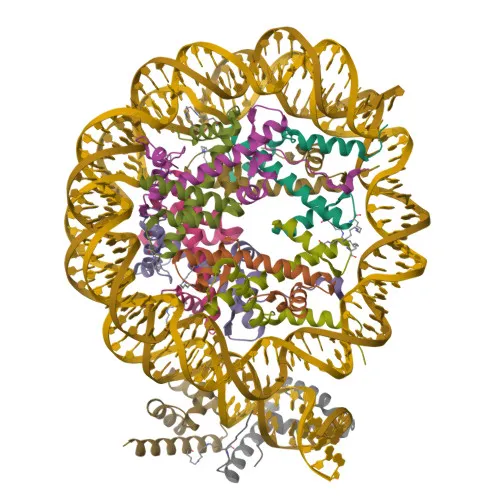
Histone H3 is a core component of the nucleosome, wrapping and compacting DNA into chromatin. This limits DNA accessibility to transcriptional machinery, thereby regulating transcription, DNA repair, replication, and chromosomal stability. Post-translational modifications of histones, collectively termed the histone code, modulate chromatin structure and function.
Related references:
- Acetylation at lysine 14 (K14ac) of histone H3 is a well-characterized mark associated with transcriptionally active chromatin. It is deposited by histone acetyltransferases such as GCN5/PCAF and removed by histone deacetylases. K14ac likely facilitates chromatin relaxation by neutralizing the positive charge of lysine, reducing histone–DNA interactions.
Related references: PMID:16185088, PMID:16267050, PMID:16457588
- Histone H3 is primarily localized in the nucleus and chromosome. The canonical histone H3.1 (encoded by multiple genes, SWISS P68431) is replication-dependent and expressed throughout the cell cycle. In contrast, the testis-specific H3.1t variant (SWISS Q16695) is expressed in testicular cells and replaces canonical H3.1 during spermatogenesis.
Related references:
- This antibody was raised against a synthetic acetylated peptide corresponding to residues around K14 of human histone H3.1 (NP_003520.1). It recognizes the acetylated form of lysine 14 on both H3.1 and H3.1t isoforms, enabling studies of K14ac in various biological contexts.
Related references: PMID:19608861
Experimental Guidance and Technical Tips
- Western blot (WB): For optimal detection of histone H3 K14 acetylation, consider enriching histones via acid extraction from cells treated with histone deacetylase inhibitors (e.g., trichostatin A, sodium butyrate) to increase acetylation levels. Use a 15% SDS-PAGE gel for resolution. Validate antibody specificity by competitive inhibition with the acetylated peptide or by comparing signals from wild-type and HDAC inhibitor–treated samples.
- Immunofluorescence/ICC: Fix cells with 4% paraformaldehyde and permeabilize with 0.1% Triton X-100. Methanol fixation may also be used. Ensure appropriate controls, such as peptide competition, to confirm nuclear staining patterns.
- ELISA: Use the antibody for detecting acetylated histone H3 peptides in plate-based assays. Pair with a pan-H3 antibody for normalization.
- The antibody is predicted to react with a wide range of species due to high sequence conservation around K14; however, validation in non-human, mouse, or rat samples is recommended.
CamelBio: Your One-Stop Sourcing Bridge
CamelBio provides diagnostic manufacturers, labs, and research institutes with one-stop access to IVD raw materials, technical services, and consulting—covering every stage from concept to clinic. For researchers exploring epigenetic regulation and histone modifications, we supply validated antibody pairs, optimized monoclonal/polyclonal antibodies, and bulk ancillary reagents. Our procurement capabilities extend to rare target raw-material sourcing, ensuring you have the critical tools—like this acetyl-Histone H3 (K14) antibody—for your assay development pipeline. Partner with CamelBio to streamline your IVD research and diagnostic production.
REQUEST A QUOTE
Our professional team will reply to you within one business day. Please feel free to contact us!