Polyclonal Antibodies
ACBD5 Rabbit pAb - Q5T8D3
Item Number : CM0012864
Price varies based on specs and customizations
- Application
- WB, ELISA
- Cross Reactivity
- Human
- Protein Weight
- 60kDa

Shipping:
Contact us to get shipping details Enjoy On-time Dispatch Guarantee.
Why Choose Us
Easy ordering process, quality products, and dedicated support for your business success.
Core Product Specifications and Parameters
| Parameter | Value |
|---|---|
| Product Name | ACBD5 Rabbit pAb |
| Remarks/Alias | RDLKD; ACBD5 |
| Species | Human |
| GeneID (Human) | 91452 |
| Immunogen | Recombinant fusion protein containing a sequence corresponding to amino acids 170-440 of human ACBD5 (NP_663736.2) |
| Source | Rabbit |
| Category | Polyclonal Antibodies |
| Application | WB, ELISA |
| Cross Reactivity | Human |
| SWISS | Q5T8D3 |
| Protein Weight | 60kDa |
| Shipping | Ice bag |
Biological Background: ACBD5 Function and Localization
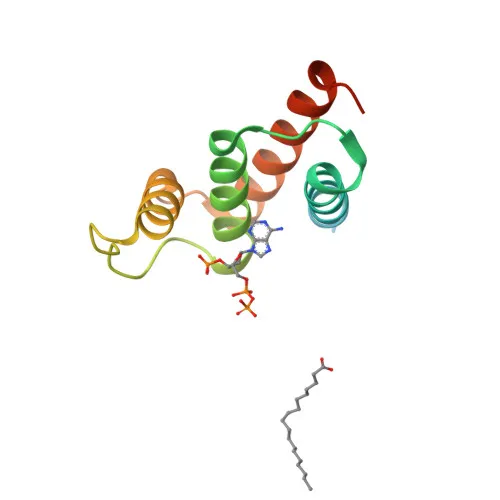
- ACBD5, also known as RDLKD, is an acyl-CoA-binding domain-containing protein 5 that functions as the peroxisome receptor for pexophagy, the selective autophagic degradation of peroxisomes.
- It binds medium- and long-chain acyl-CoA esters with its acyl-CoA-binding domain, implicating it in intracellular lipid transport and metabolism.
- The protein is anchored to the peroxisome membrane, where it likely facilitates the recruitment of autophagy machinery during pexophagy.
- ACBD5 is encoded by the ACBD5 gene (KIAA1996) in humans, and may exist in multiple isoforms due to alternative splicing.
- Post-translational modifications include acetylation and phosphorylation, which may regulate its activity or localization.
- Mutations in ACBD5 have been associated with leukodystrophy, a group of disorders affecting white matter in the brain, linking the protein to neural health.
Experimental Guidance and Technical Tips
- The immunogen covers amino acids 170-440 of human ACBD5, targeting a region likely spanning the acyl-CoA-binding domain; this design may yield antibodies recognizing native and denatured forms.
- For Western blotting, a band approximately 60 kDa is expected; validate specificity using positive (e.g., peroxisome-enriched) and negative (knockout or silenced) controls.
- ELISA applications may be optimized by coating with recombinant protein or peptide; cross-reactivity with other ACBD family members should be assessed using recombinant proteins.
- Consider antigen retrieval or mild fixation when using for immunofluorescence, as the target is membrane-bound.
- Batch-to-batch consistency should be verified for quantitative studies.
CamelBio: Your One-Stop Sourcing Bridge
CamelBio is a comprehensive one-stop platform supplying diagnostic manufacturers, research laboratories, and academic institutions with high-quality IVD raw materials, including validated antibodies, antigen reagents, and ancillary components. For researchers investigating peroxisomal biology, autophagy, or lipid metabolism, this ACBD5 polyclonal antibody can be sourced together with complementary reagents such as peroxisome markers or autophagy inhibitors, streamlining your assay development. Contact CamelBio for custom sourcing or bulk orders to accelerate your project from concept to clinic.
REQUEST A QUOTE
Our professional team will reply to you within one business day. Please feel free to contact us!